Notion vs Airtable (2026): Which Is Right for Your Team?
Notion vs Airtable in short: Notion is a docs-first workspace that grew databases, best for wikis, notes, and pages with light data. Airtable is a database-first tool, best for relational records, heavy formulas, and automations at scale. If your work is mostly writing, choose Notion; if it is mostly structured data, choose Airtable. A third option keeps Notion and adds Google Sheets for analysis.
Notion and Airtable get compared constantly, and usually unfairly. They solve overlapping problems from opposite ends: Notion is a doc tool that grew databases. Airtable is a database that grew a UI. Which one fits depends on whether your work is mostly writing or mostly data.
This post breaks down the features, pricing, and where each actually wins, plus a third option a lot of teams miss: stay in Notion and add real-time 2-way sync to Google Sheets through Sync2Sheets. You get Notion's docs-first feel and the data-analysis power that pushed you to consider Airtable in the first place.
Notion vs Airtable at a glance
| Notion | Airtable | |
|---|---|---|
| Origin | Docs and pages with databases inside | Spreadsheet-database hybrid |
| Best at | Documentation, wikis, structured pages, light databases | Structured data, linked records, automations at scale |
| Database power | Good for hand-curated data | Strong for relational, formula-heavy data |
| Pages and docs | First-class, deeply integrated | Bolted on (interfaces, comments) |
| Formulas | ~60 functions, single-page scope | Hundreds of formulas, cross-table references |
| Automations | Built-in but basic | Advanced, scriptable |
| Pricing | Free / paid plans start lower | Free is more limited; paid plans cost more |
| Best fit | Teams who live in docs and want some structured data alongside | Teams who live in data and need it to be the front end |
If you can't decide between the two because your team needs Notion's writing experience AND Airtable's data muscle, the answer is usually Notion + Sync2Sheets rather than Airtable. We'll get to that in the closing sections.
Notion and Airtable at a Glance
Notion and Airtable are powerful tools that allow individuals and teams to organize their work and information without any coding knowledge. Each platform has its own unique features that cater to different needs. Here's an overview of each:
Notion Features Overview
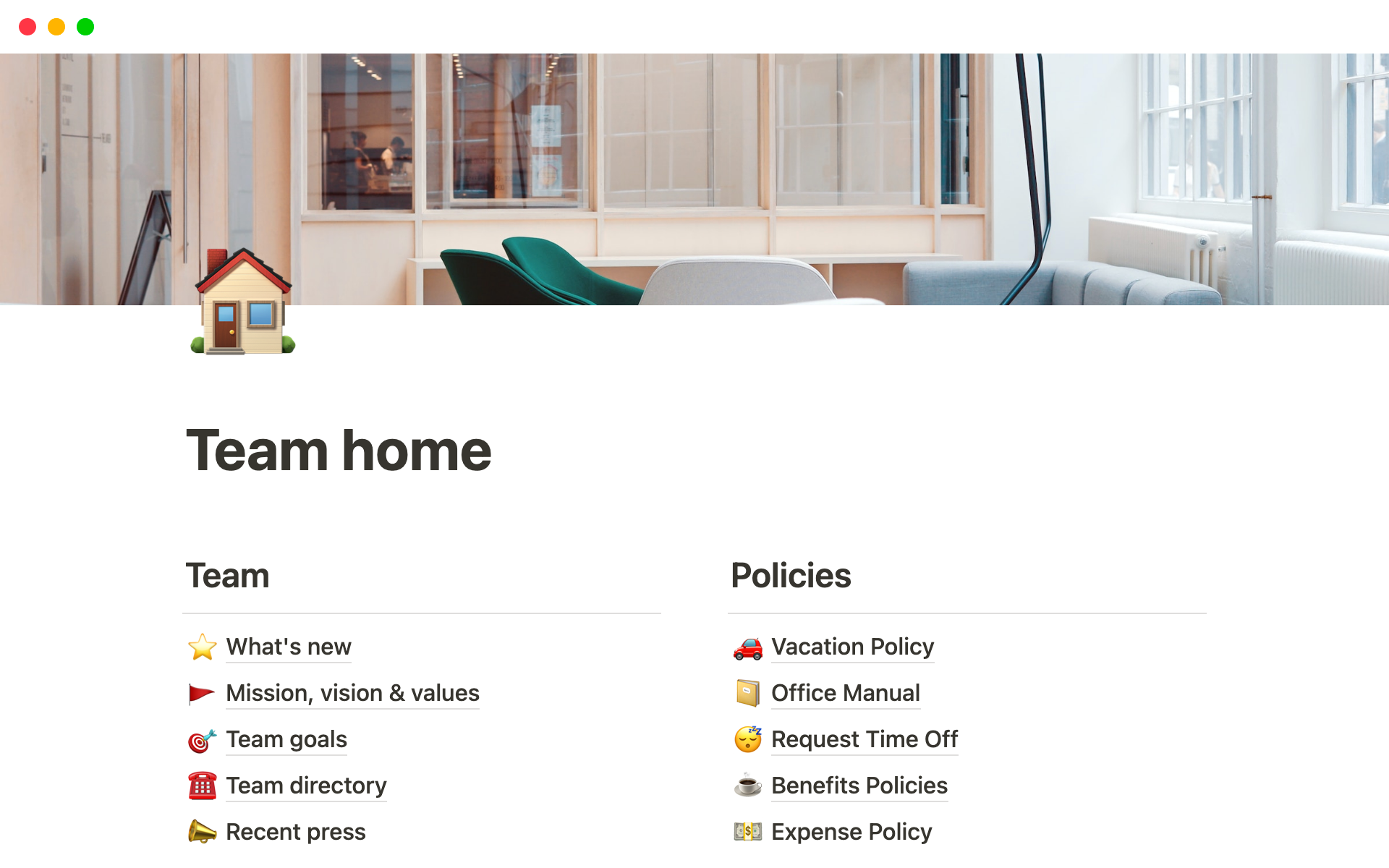
Notion is well-known for its all-in-one workspace approach, offering users:
- Blocks: Users can create pages with versatile blocks for text, images, bookmarks, code, and more.
- Databases: Flexible databases allow for various data views such as tables, Kanban boards, calendars, and lists.
- Templates: An extensive collection of templates for personal, educational, and professional use.
- Customization: Deep customization options enable users to tailor their workspace to specific workflows.
Notion Pros
- Excellent for knowledge management and collaborative documentation.
- Highly flexible interface encourages creativity in organizing content.
- Robust template offerings streamline the creation of new documents and organizational systems.
Notion Cons
- The extensive range of features can be overwhelming for new users.
- Database functionality can be limited compared to dedicated database tools.
- Performance may suffer with overly complex setups.
Airtable Features Overview
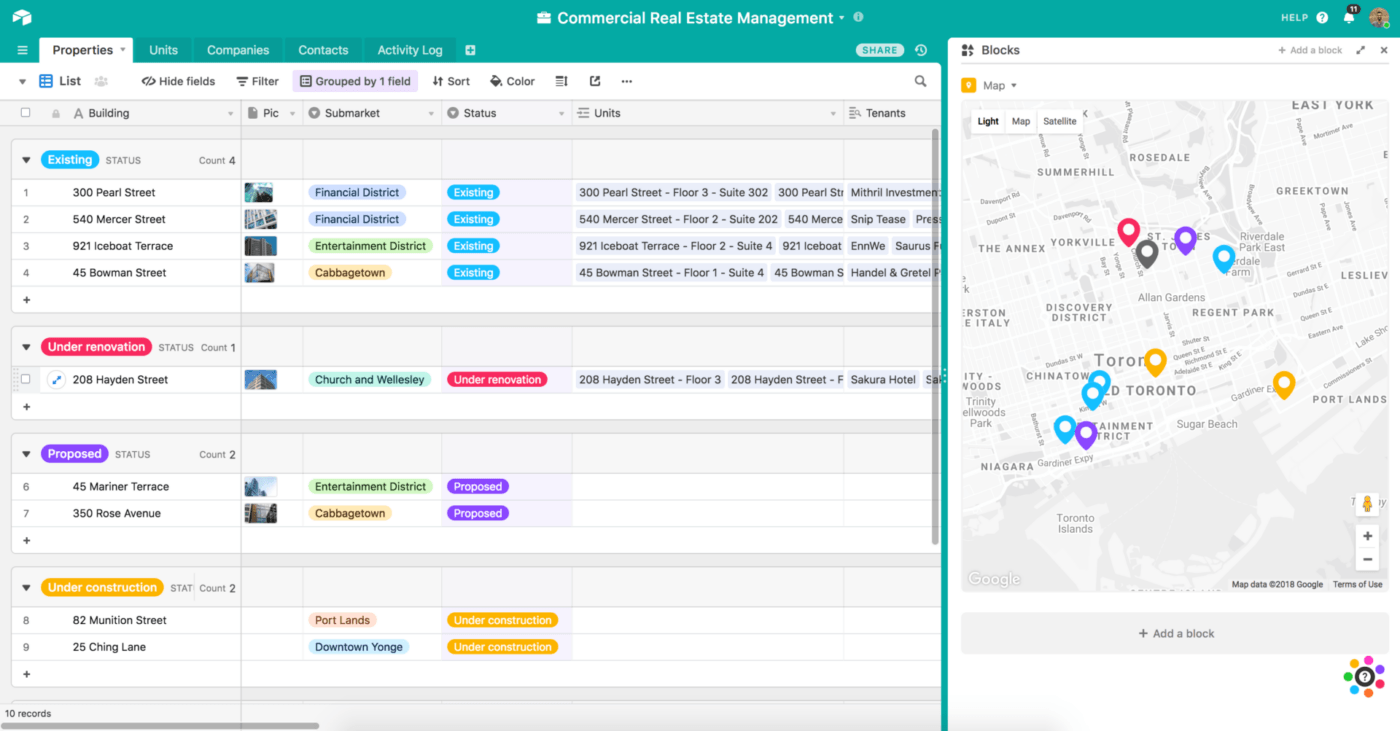
Airtable focuses on being a versatile spreadsheet database, offering the following features:
- Spreadsheet Interface: Familiar grid view with the power of a relational database.
- Views: Multiple views including kanban, calendar, gallery, and a unique form view.
- Automations: Built-in automation tools to streamline tasks and workflows.
- Marketplace: An app marketplace featuring extensions to enhance Airtable's capabilities.
Airtable Pros
- Intuitive for those familiar with spreadsheets.
- Strong data management features with linked records across tables.
- Powerful automations and integration options.
Airtable Cons
- While versatile, it may not be as effective as Notion in managing text-heavy projects.
- Steeper learning curve for those not accustomed to database concepts.
- Advanced features locked behind higher pricing tiers.
By understanding these key aspects of Notion and Airtable, you can determine which tool better suits your project needs. Whether you prioritize data management or content creation will greatly influence which platform will boost your productivity.
With that in mind, let's take a closer look at how Notion works.
Notion: The All-in-One Workspace
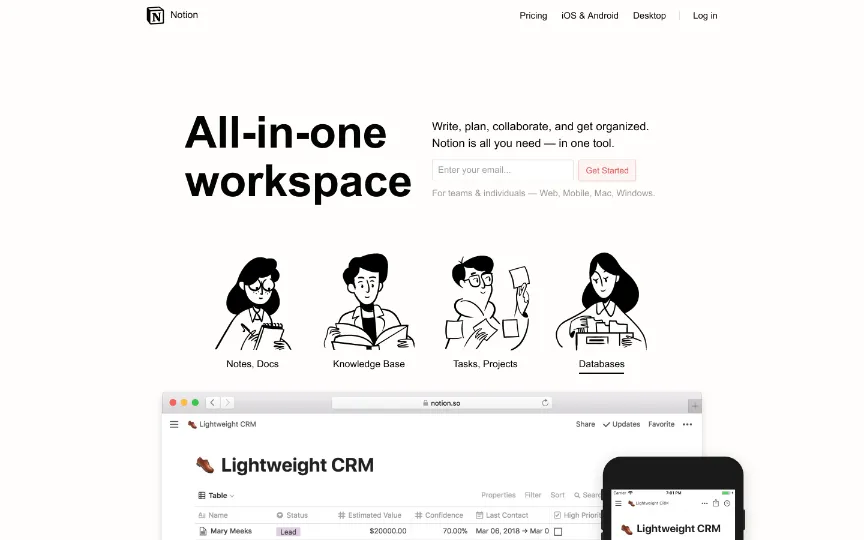
Notion is a comprehensive workspace tool, designed to be the go-to software for various organizational needs. It combines note-taking, project management, databases, and more into a single, easy-to-use platform. With Notion, you can seamlessly switch between tasks and resources without using multiple apps.
Understanding Notion's All-in-One Workspace Concept
The main idea behind Notion is its ability to offer custom layouts and tools that adapt to multiple work scenarios. Users can create pages within pages, like a digital notebook that can go on forever. Each page can be used as:
- A document with different formatting options.
- A kanban board for managing tasks.
- A spreadsheet-like database for tracking information.
- A calendar for scheduling events.
Popular Notion Use Cases
- Personal Management: Individuals use Notion to combine their daily journaling, budget trackers, and personal goals into one private space.
- Team Collaboration: Teams in startups and other small companies often rely on Notion for creating collaborative wikis, where they can keep documentation and project planning up-to-date in real time.
- Content Creation: Content creators organize their editorial calendars and compose articles within Notion, taking advantage of its powerful writing features.
By integrating different functions into each user's unique workflow, Notion promotes productivity across different areas. Whether you're managing personal tasks or collaborating on big projects, this versatile platform offers a wide range of tools designed to improve your workflow.
Airtable: The Versatile Spreadsheet Database
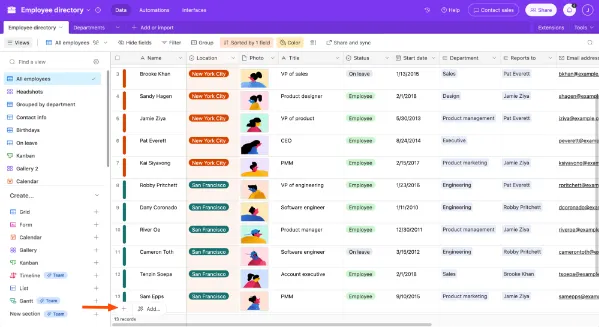
Airtable is a modern take on spreadsheets, combining the simplicity of a spreadsheet with the power of a database. Its interface is easy to use, making it simple for users to organize their work, ideas, and projects effectively.
Key Features
- Spreadsheet Interface: Users familiar with Excel or Google Sheets will find Airtable's grid view comfortably familiar, yet more powerful.
- Field Types: Unlike standard spreadsheets, Airtable allows for a variety of field types including attachments, links to records in other tables, checkboxes, dropdowns, and more.
- Views: Multiple views such as kanban, calendar, gallery, and form offer diverse perspectives on the data.
Popular Airtable Use Cases
- Project Management: Teams can track tasks with custom statuses, assignees, and timelines.
- CRM: Businesses can create tailored customer relationship management systems by linking contacts to interactions and accounts.
- Event Planning: Organizers can manage venues, vendors, guest lists, and schedules all in one place.
By positioning itself as both user-friendly and robustly featured, Airtable appeals to those needing more than what traditional spreadsheets offer without the complexity of full-fledged database systems.
Comparing 3 Key Features of Notion and Airtable
A direct comparison of Notion and Airtable's key features can provide valuable insights for users deciding between the two platforms. Both apps let you do a lot, but their strengths lie in different areas.
1. Collaboration and Sharing Features
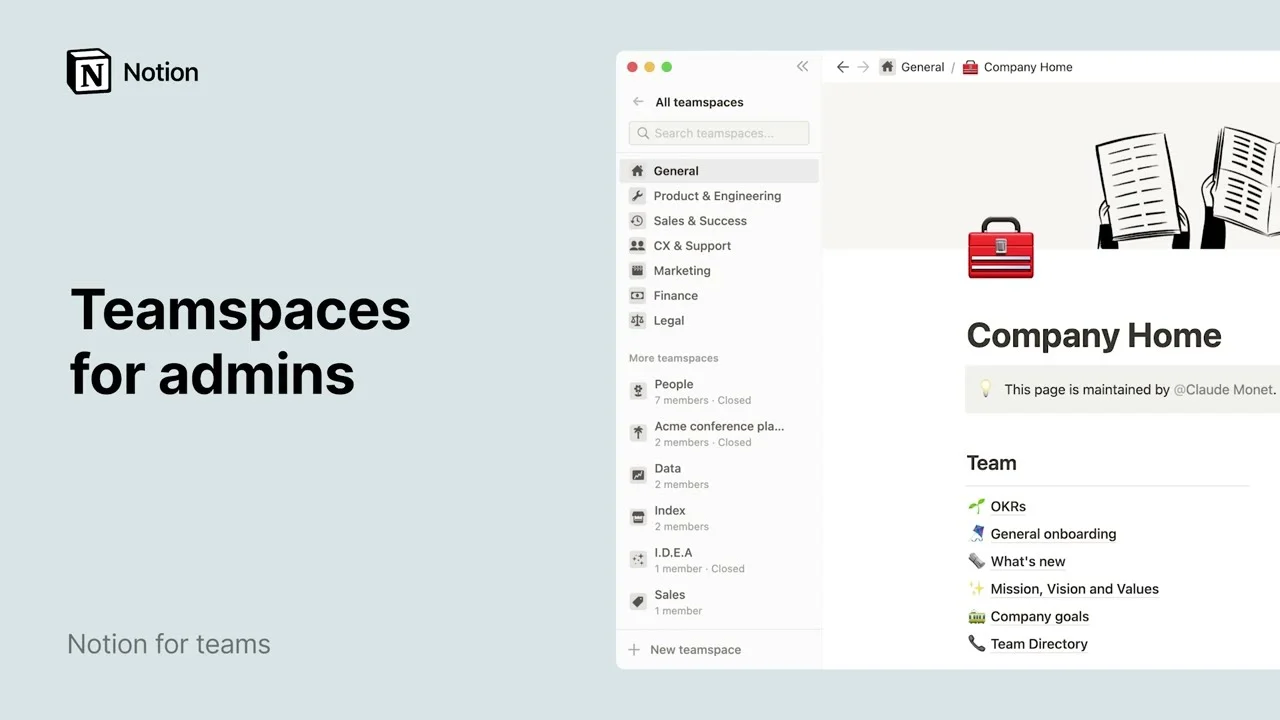
Notion shines with its easy-to-use interface, making collaboration smooth and efficient. It allows users to share pages publicly or with specific people, ensuring information is accessible to those who need it.
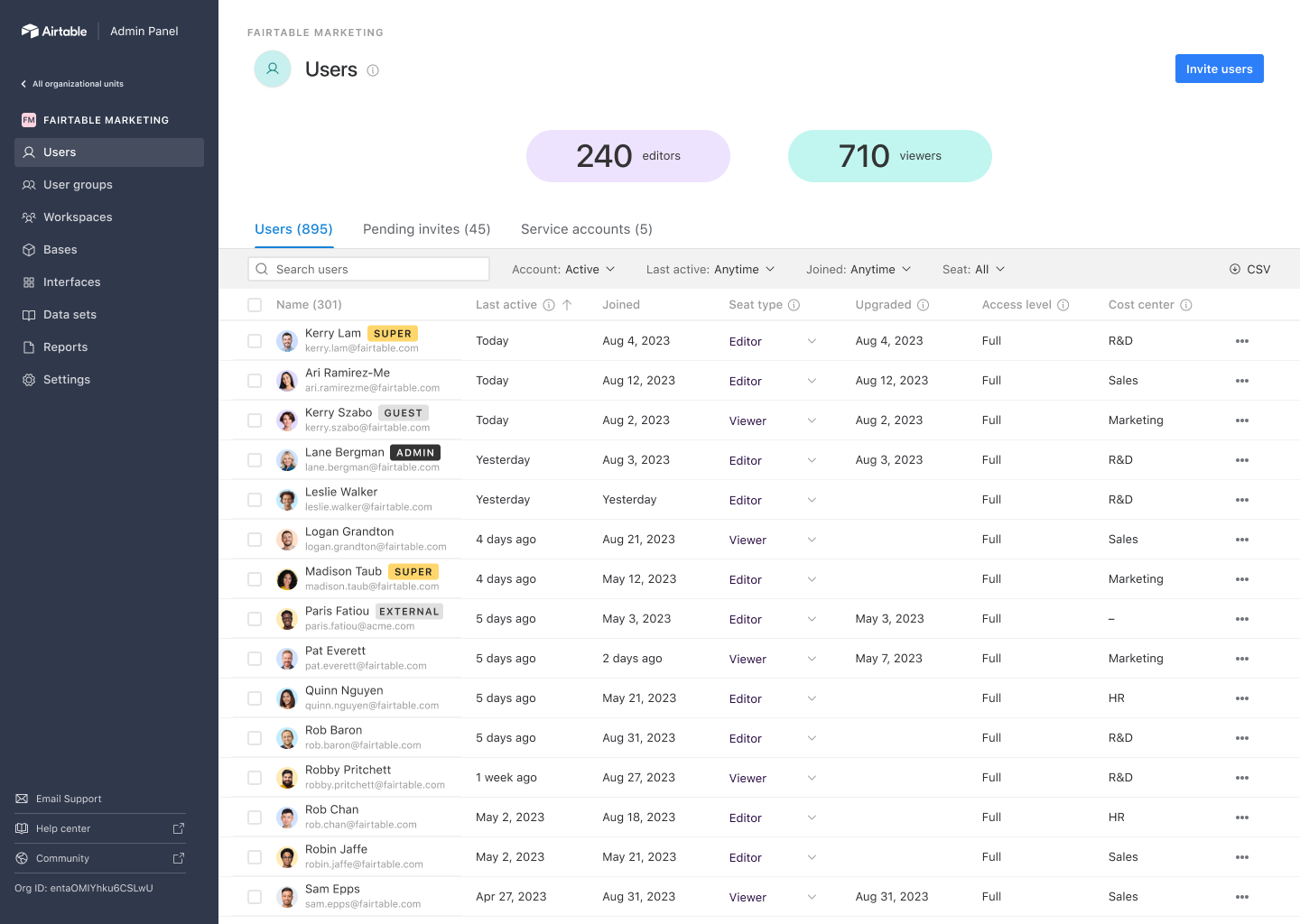
Airtable enhances collaboration through its advanced sharing options and permissions. Users can share entire bases or individual views, providing a flexible approach to team collaboration.
2. Data Organization and Management
With Notion, information is organized using blocks within pages, a unique approach that supports multiple content types. However, it may not be as robust for data-heavy tasks as Airtable. Teams that want Notion's flexibility with spreadsheet-grade analysis can sync Notion to Google Sheets and get both.
In contrast, Airtable excels at handling structured data. Its spreadsheet-like interface and smart data organization tools make managing large databases easier and more intuitive.
3. Integrations and Automations
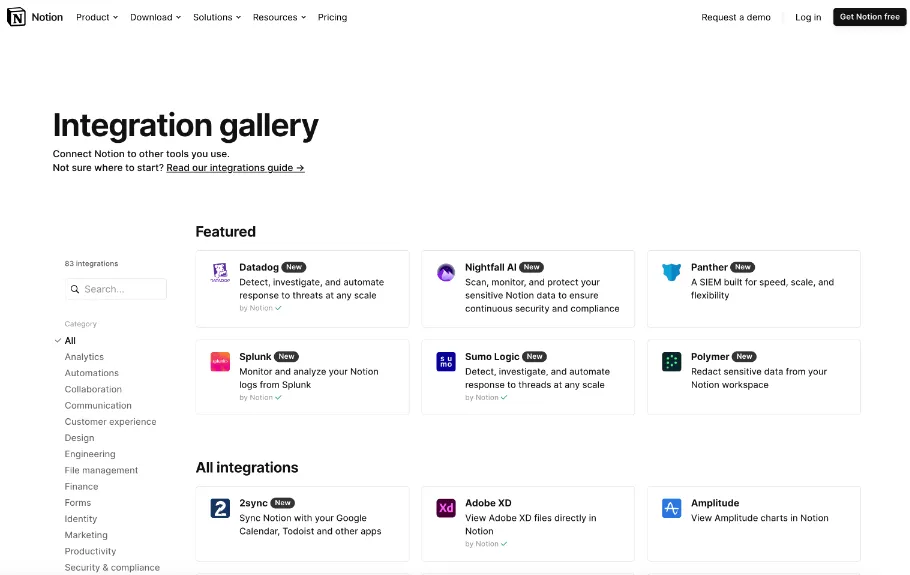
Notion offers limited native integrations compared to Airtable. However, it integrates well with Zapier, allowing users to connect with other apps.
On the other hand, Airtable boasts a rich ecosystem of integrations and built-in automations, making it an excellent choice for workflows requiring extensive connectivity with different tools.
Notion vs. Airtable Pricing
Another key factor to consider when deciding between Notion and Airtable is price. Here's how the two apps stack up against each other. Note that all prices listed assume annual billing.
Notion Pricing
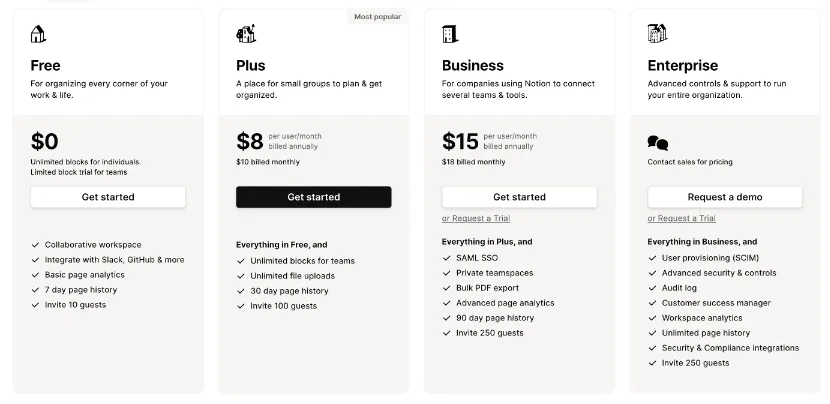
Notion's pricing is appealing, especially for individuals and small teams. The app currently offers 3 main pricing tiers:
- Free: If you're using Notion solo, this is likely all you need. You get unlimited blocks, 3rd party integrations, and a 7-day page history.
- Plus: This will be the best plan for most teams. You get unlimited blocks for your team, unlimited file uploads, and a 30-day page history. Notion Plus costs $10 per seat/month.
- Business: Need even more team features? Then this plan has you covered with SAML SSO, private teamspaces, bulk PDF export, and a 90-day page history. Notion Business costs $20 per seat/month.
Notion AI is now bundled into each plan as a limited trial. Heavier use is metered through Notion credits (Custom Agents at $10 per 1,000 monthly credits). See our Notion pricing breakdown for the full detail.
Airtable Pricing
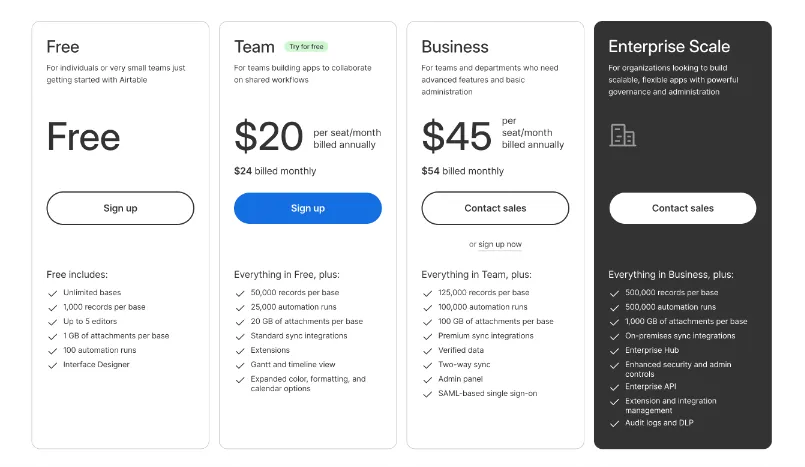
Overall, Airtable's pricing is higher than Notion's, reflecting the app's focus on business users. Airtable currently offers 3 main pricing plans:
- Free: This plan is aimed at individuals who are learning to use the app, as well as small teams. You get unlimited bases, up to 1,000 records per base, and 100 automation runs. You also get access to Airtable's interface designer and 1 GB of attachments per base.
- Team: If you're working with larger volumes of data in a team setting, this is the plan to choose. You get 50,000 records per base, 20 GB of attachments per base, and 25,000 automation runs. Airtable Team costs $20 per seat/month.
- Business: This plan is best for companies using Airtable at scale. You get 125,000 records per base, 100,000 automation runs, and 100 GB of attachments per base. You also get access to an admin panel, two-way sync with external apps, and SAML-based single sign-on. Airtable Business costs $45 per seat/month.
Airtable also offers an AI add-on, which is priced at an additional $6 per seat/month.
Overall, the value for money hinges on the complexity of your projects and the scale of your team's collaboration. Notion's pricing tends to be more accessible for smaller teams or individual users, while Airtable's higher-tier plans cater to larger organizations requiring extensive data handling and automation.
The verdict
Notion wins on writing, wikis, and flexible layouts. Airtable wins on structured data, automations, and scale. The honest answer most posts dodge: a lot of teams trying to decide between the two are really asking "how do I keep my docs in Notion AND get real data analysis?" Switching to Airtable means losing the docs experience the team loves. Staying in Notion means hitting the data ceiling.
There's a third option that almost no comparison post mentions: keep Notion, add Google Sheets through real-time 2-way sync.
The third option: Notion + Google Sheets via Sync2Sheets
Sync2Sheets keeps any Notion database in real-time 2-way sync with a Google Sheet. The team writes in Notion; the analysts work in Sheets; both sides see the same data within seconds. You pick the sync direction column by column:
- Notion Sheets for columns the team curates in Notion
- Sheets Notion for columns driven by Sheets formulas (
=GOOGLEFINANCE,=IMPORTXML, VLOOKUPs, anything Notion formulas can't do) - Both ways for shared fields like Status or Owner
This setup gives you what Airtable promises (structured data, formulas, charts, pivots) without leaving the workspace your team is already comfortable in. And it costs less: Sync2Sheets is $12-$40/month flat, no per-user pricing.
Concretely, a Notion + Sync2Sheets stack gives you:
- Every Google Sheets formula working on your Notion data (450+ functions vs Notion's ~60)
- Pivot tables and charts embedded back into Notion pages via table blocks and block updates
- Bulk page creation from Sheets rows (great for imports and migrations) via page creation
- A live backup of your entire Notion workspace, with an audit log of schema changes
- Real-time 2-way sync on every plan, with no separate platform to learn
See the full 2-way sync guide or compare Sync2Sheets with Dokin, Whalesync, Coefficient, and Zapier for the rest of the landscape.
Install Sync2Sheets (free 7-day trial, no credit card) and try it on one database. If it doesn't close the gap, Airtable's still there.
Frequently asked questions
Is Notion or Airtable better?
It depends on your work. Notion is better for documentation, wikis, and pages with light databases. Airtable is better for relational data, heavy formulas, and automations at scale. If you mostly write, pick Notion; if you mostly manage structured data, pick Airtable. Many teams keep Notion and add Google Sheets for the data side.
Can Notion and Airtable work together?
There is no native Notion-Airtable integration, so teams usually choose one. A common alternative is to keep Notion and connect it to Google Sheets with Sync2Sheets for real-time 2-way sync. That adds spreadsheet formulas, pivots, and charts to Notion without migrating your docs to Airtable.
Is Airtable more powerful than Notion for databases?
Yes, for relational and formula-heavy data. Airtable has cross-table references, hundreds of functions, and scriptable automations. Notion databases are great for hand-curated data but limited to about 60 single-page functions with no pivot tables or native charts. For spreadsheet power inside Notion, sync it to Google Sheets.
Is Notion or Airtable cheaper?
Notion is cheaper for most teams. Notion Plus is $10 per seat per month and Business $20; Airtable Team is $20 per seat and Business $45. Both scale by seat. Sync2Sheets is a flat $12 to $40 per month, so a Notion plus Sheets stack often costs less than Airtable at scale.
Should I switch from Notion to Airtable?
Switch only if your real bottleneck is data: relational links, complex formulas, or automations Notion cannot handle. If you mainly need better analysis, charts, or pivot tables, you can keep Notion and add Google Sheets through Sync2Sheets instead of migrating your whole workspace to Airtable.
Sync Notion to Google Sheets in real time
Use Sheets formulas in Notion, build dashboards, back up your databases, and compare tools. Free 7-day trial.