Notion for Project Management: Tips, Use Cases, and Best Practices
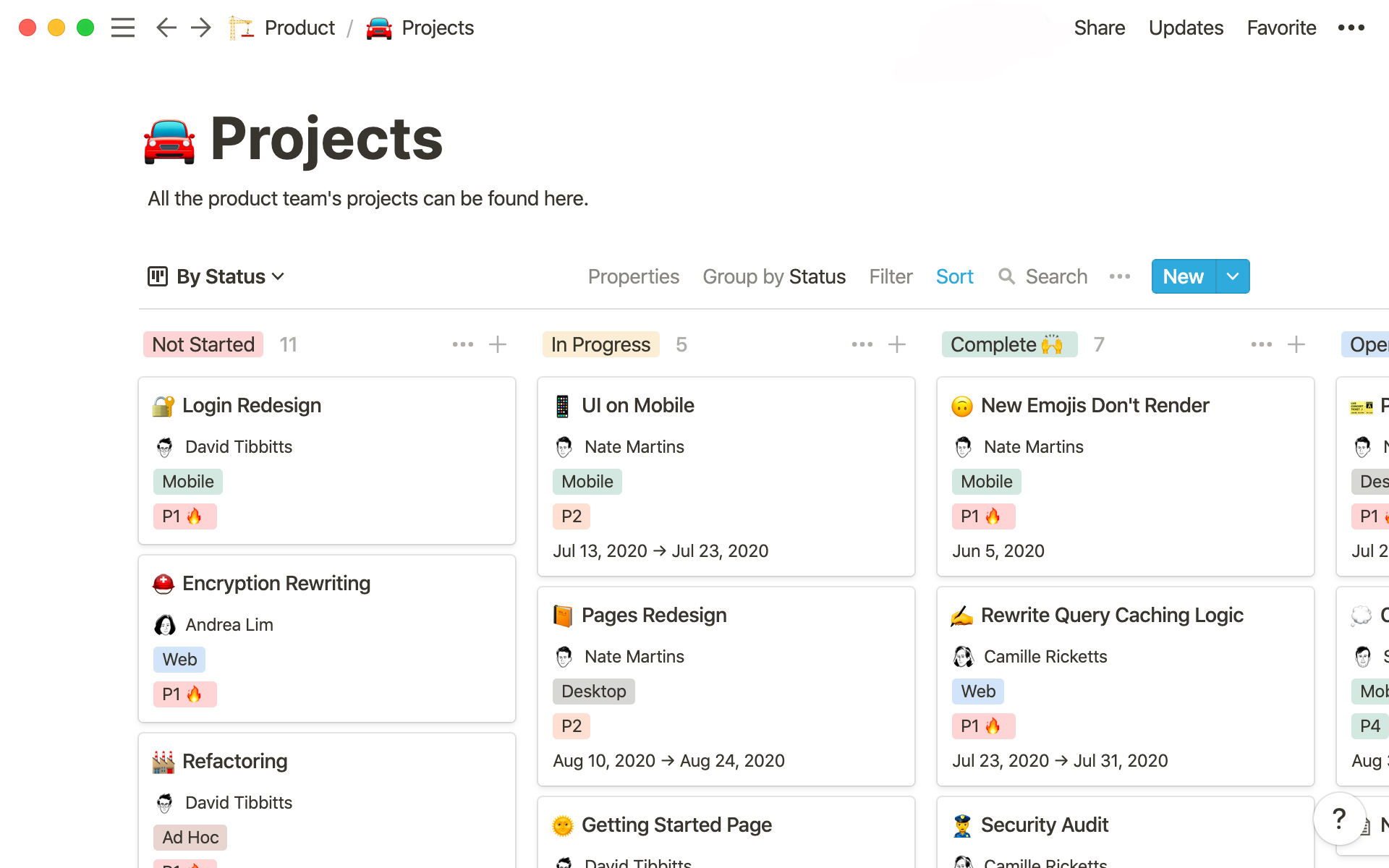
Notion is a decent project management tool. Not a great one, not a terrible one. It wins on flexibility, loses on reporting. Whether it's right for your team depends more on how you work than on Notion itself.
This post covers what Notion does well (wikis, kanban, roadmaps, views), where it falls short (reporting, async comms), and which third-party tools cover the gaps. For teams that need live reports, burndown charts, or external-facing dashboards, Sync2Sheets mirrors Notion to Google Sheets in real time.
Understanding Notion as a Project Management Tool
Notion is usually pitched as an "all-in-one workspace": docs, wikis, and databases in the same editor. For project management, that versatility is the whole point. One tool, many shapes.
Key Project Management Features in Notion
Notion's extensive feature set is designed to cater to a wide array of project management necessities. Some of these include:
- Wikis: Users can create comprehensive project briefs and maintain centralized documentation.
- Kanban boards: These help visualize workflow stages and manage tasks efficiently.
- Roadmaps: Dynamic project roadmaps provide a clear overview of milestones and timelines.
- Customizable views: Determine how your project information is presented with options like to-do lists, visual timelines, tables, galleries, and calendars.
These tools establish Notion as not only a traditional task management tool but also a comprehensive solution that allows users to customize their workflows according to their specific project needs.
Collaboration in Notion
Real-time editing, comments, mentions, granular permissions. Standard stuff in 2026, but Notion does it well, and the fact that comments thread on any block (not just pages) actually matters for project work.
Pros and Cons of Using Notion for Project Management
Like any tool, Notion has its strengths and weaknesses when applied as a project management solution. Here's an overview:
Strengths
- Cost-efficient: As an all-in-one workspace, it can replace a costly set of multiple software tools.
- Extensive template library: With many project management templates to choose from, users can quickly get started without much technical knowledge.
- Powerful visualization options: Notion lets you customize the way you view and track your projects, so you can create the solution that's best for your team.
Weaknesses
- Complex interface: The block-based content organization can be overwhelming for some users.
- Lack of built-in reporting tools: Tracking team performance requires you to use 3rd-party integrations.
- Limited communication features: Notion's built-in communication tools are limited, especially for long, real-time discussions.
While Notion's project management capabilities are expansive and flexible, it's important to consider these pros and cons when deciding if it's the right fit for your team. Notion is a great option for many organizations, but it may not suit complex enterprise project management needs.
4 Notion Project Management Use Cases
Let's take a closer look at the different ways you can use Notion for project management, starting with company wikis:
1. Wikis for Your Company's Most Important Information
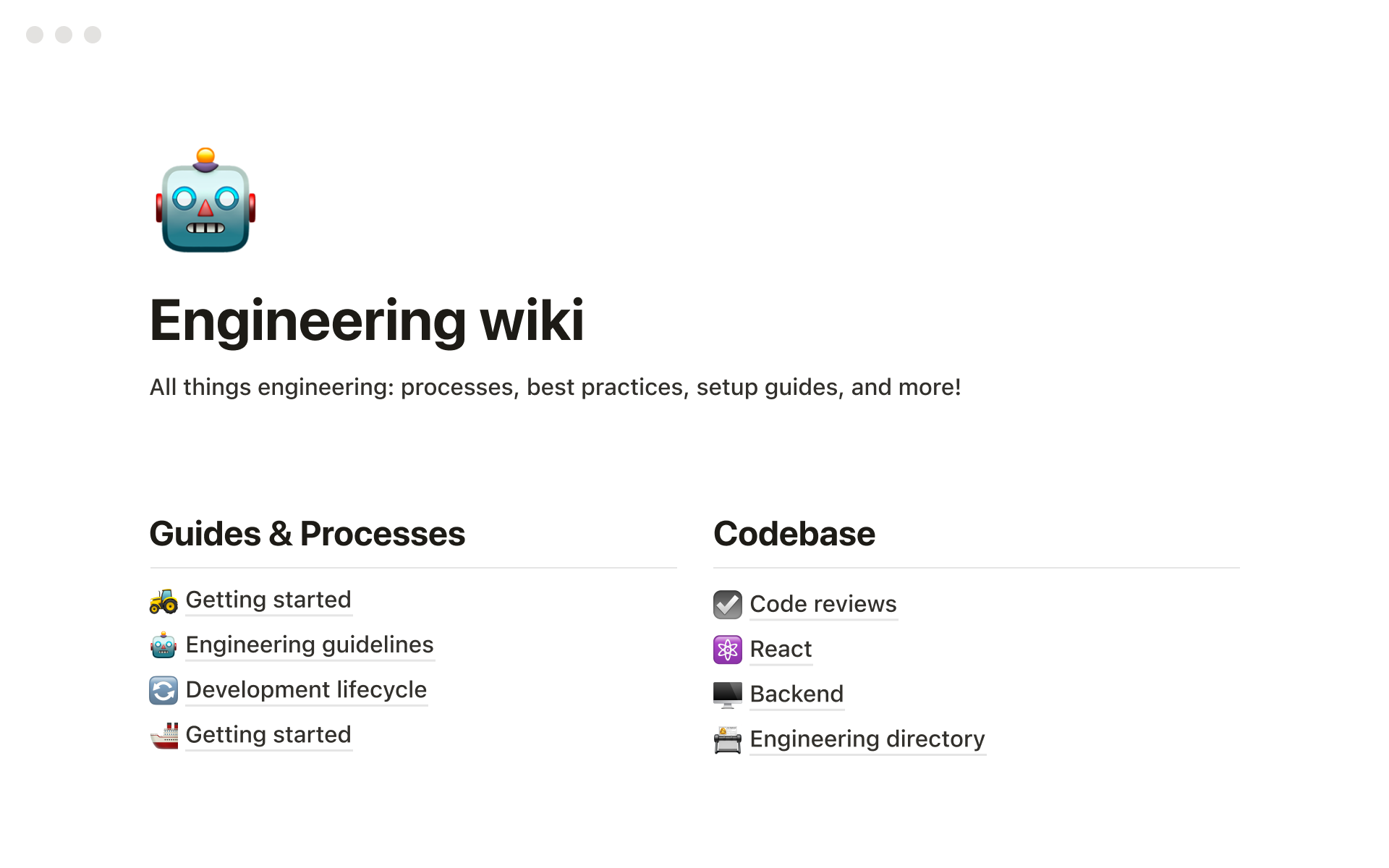
Notion offers a robust wiki feature that allows teams to centralize their most important information in one place. With Notion's wiki functionality, you can create a knowledge base that's easily accessible and searchable by all team members.
Here are a few standout features:
- Flexible Structure: Notion wikis allow you to organize information in a way that makes sense for your team. You can create pages and subpages to categorize your content effectively.
- Rich Text Editing: Customize your wiki pages with rich text formatting options such as headings, bold, italics, bullet points, numbered lists, and more. This makes it easy to structure your information and highlight key points.
- Embeddable Media: Enhance your wiki pages by embedding media such as images, videos, audio files, or interactive content from external sources. This helps to make your documentation more engaging and visually appealing.
- Version History: Keep track of changes made to your wiki pages with Notion's version history feature. You can view previous versions of a page, see who made the changes, and even revert to an earlier version if needed.
You can learn more about Notion wikis here.
2. Kanban Boards for Task Status Tracking
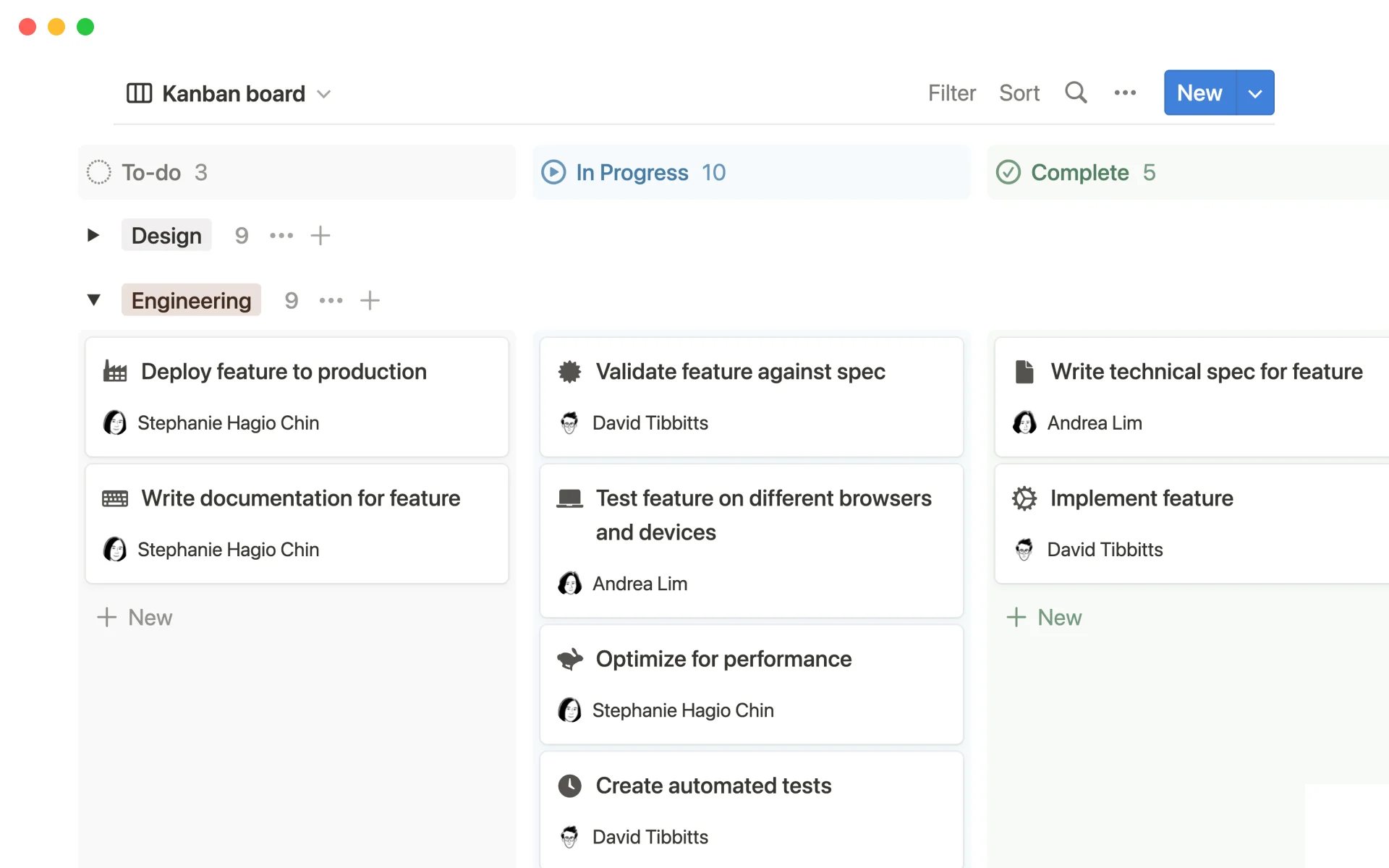
Notion's Kanban boards are a powerful project management tool. They provide a visual representation of workflows, making it easier to track task progress and identify bottlenecks. You can customize Notion Kanban boards to suit various project needs, and it only takes a few clicks to set one up.
To start, create a new page in Notion and select "Board" under the database options. Each column represents a stage in your workflow, such as To Do, In Progress, or Done. You can add or rename these stages based on your specific project requirements.
Each card within the columns represents an individual task. You can add details to these cards including:
- Task name
- Assignee
- Deadline
- Any relevant notes or files
For instance, if you're managing a content creation project, you may have columns like Ideas, Outline, Draft, Review, and Published. Each card under these columns represents an individual piece of content in different stages of its lifecycle.
3. Roadmaps for Project Planning and Visualization
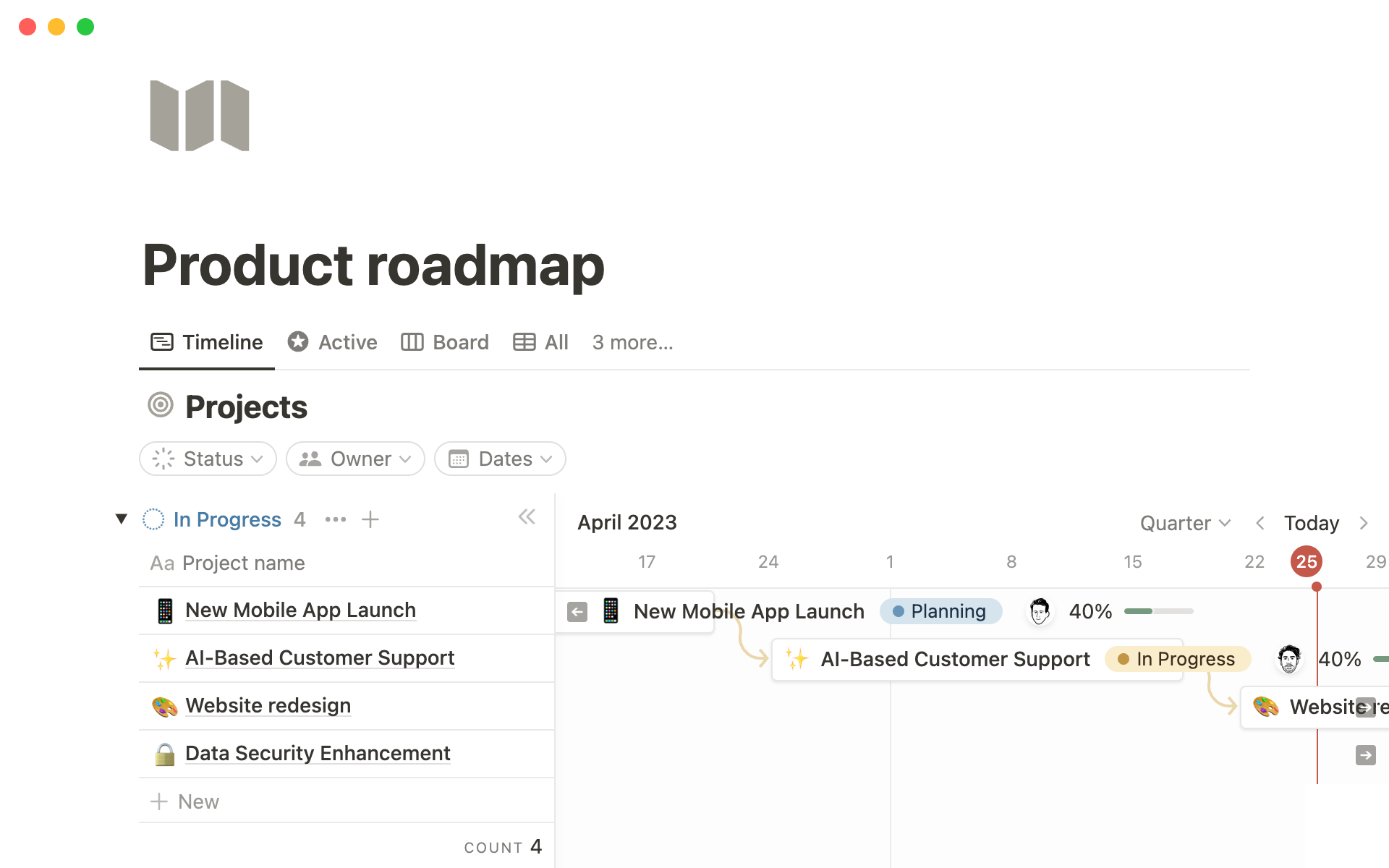
Another vital Notion project management feature is the ability to create dynamic project roadmaps that provide a clear overview of milestones and timelines.
A roadmap is essentially a high-level visual summary that maps out the vision and direction of your project over time. In Notion, you can build roadmaps using a variety of formats such as tables or Kanban-style boards.
Here's how to create a roadmap in Notion:
- Open a new page.
- Select "Templates" from the right sidebar.
- Under "Product", choose the "Product Roadmap" template.
This template gives you a bird's eye view of your entire project. You can customize it to suit your needs by adding or removing properties, rearranging columns, and applying different filters or sorts.
For example, you may want to track the progress of different workstreams in your project. You could create a multi-select property called "Workstream'' and then use this as a filter to see the tasks related to each workstream.
4. Customizable Views for Data Representation
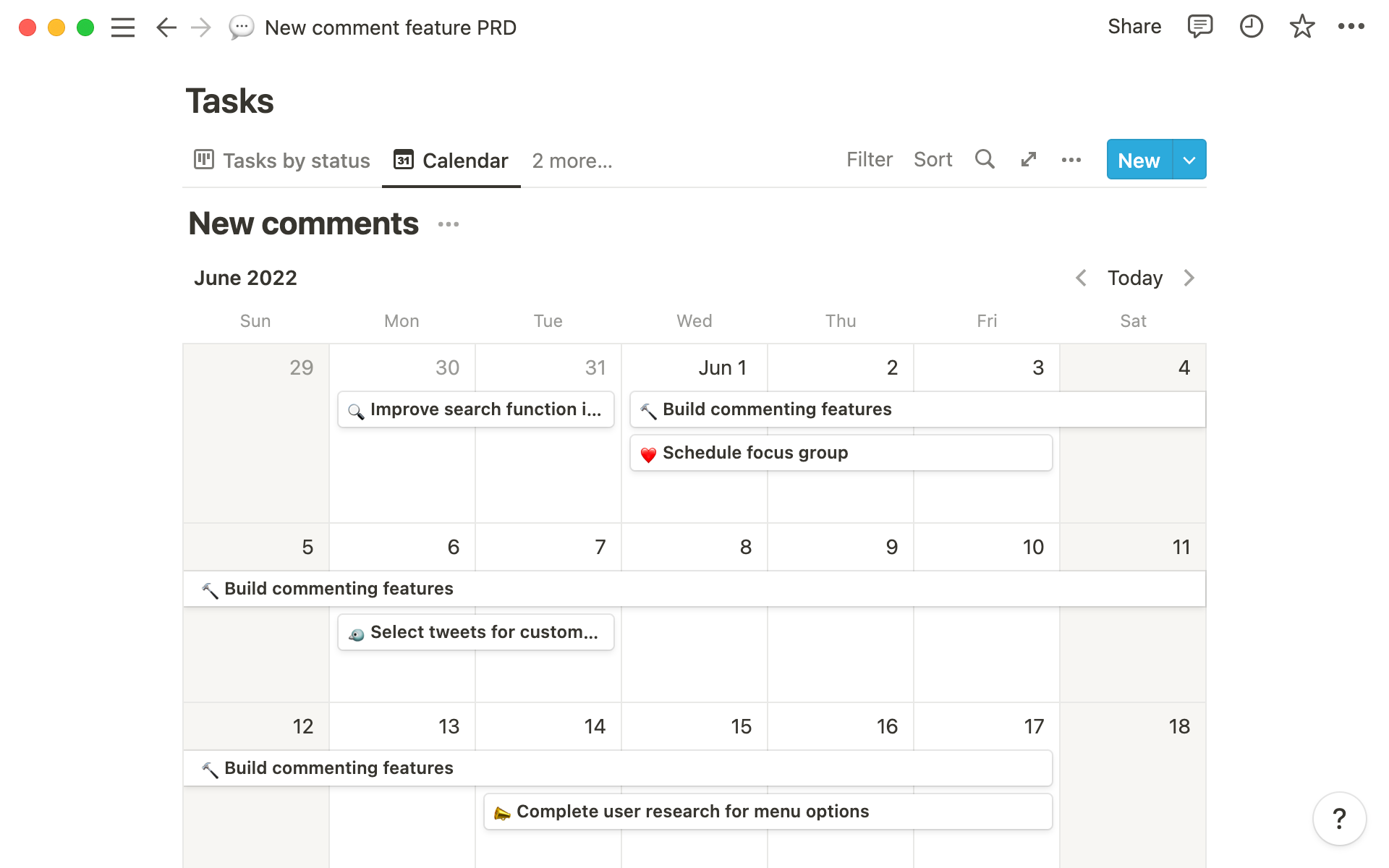
Notion's flexibility extends beyond project pages and boards. It also offers a range of customizable views like to-do lists, visual timelines, tables, galleries, and calendars.
This versatility means that every team member can choose the view that suits their working style best, promoting efficiency and productivity.
Here's an overview of how you can use Notion's different views to help manage your projects:
To-Do Lists
- Simplify task management by breaking down projects into actionable items.
- Offer clarity on individual responsibilities by assigning tasks to team members.
- Enhance productivity with checklists that track completion progress.
Visual Timelines
- Provide a macro view of project timelines, highlighting how individual tasks map onto the overall schedule.
- Allow for easy adjustments as deadlines shift, ensuring projects stay on track.
Tables
- Organize data logically, making it easier to sort, filter, and find specific information.
- Facilitate the handling of substantial amounts of data, which is especially useful for complex projects with numerous variables.
Galleries
- Display visual elements such as design mockups or branding materials in an engaging format.
- Promote a visual-centric approach to project management, where imagery plays a key role in conveying ideas.
Calendars
- Schedule tasks and deadlines in a familiar format that integrates seamlessly with other tools like Google Calendar or Outlook.
- Enable quick month-over-month navigation to plan ahead and review past activities.
By exploring these customizable views in Notion, you can craft a workspace that not only houses all vital information but also presents it in an accessible and actionable manner.
Enhancing Notion Project Management with Third-Party Integrations
Notion is a versatile project management platform. However, it does have its limitations. Luckily, there's a solution: third-party integrations.
By integrating Notion with other apps, you can enhance its functionality and make it even more powerful for tracking how your team is doing. Here are some areas where third-party integrations can be particularly helpful, as well as some integrations we recommend for project management:
Monitoring team productivity
One of the challenges of managing a team is knowing how productive everyone is being. With the right integration, you can get insights into things like:
- How much time team members are spending on different tasks
- Which projects are taking up the most resources
- The overall efficiency of your team's workflow
These insights can help you identify areas for improvement and make data-driven decisions to keep things running smoothly. We recommend a time-tracking app such as Everhour or Clockify, both of which integrate with Notion.
Evaluating performance metrics
In addition to tracking productivity, it's important to have a way to measure individual and team performance. Integrating Notion with performance management tools can give you access to metrics such as:
- The number of tasks completed by each team member
- The quality of their work (based on feedback or ratings)
- How well they're meeting deadlines
Having this information at your fingertips makes it easier to recognize top performers, address any issues early on, and provide targeted feedback and support.
Sync2Sheets is our recommended integration for this purpose. Using Sync2Sheets, you can automatically sync Notion databases with Google Sheets, ensuring that your project data is always up to date. This opens up endless possibilities for tracking project progress, generating reports, and gaining valuable performance insights.
Optimizing workflow efficiency with automation
Efficiency is key when it comes to managing projects effectively. By integrating Notion with tools that focus on workflow automation, you can:
- Automate repetitive tasks such as generating reports
- Receive notifications in Notion when team members perform tasks in other apps
- Streamline collaboration by centralizing your team's communication in Notion
Before you choose an automation tool, check for a pre-existing integration between Notion and the app you want to use. If no such integration exists, then we recommend using either Make or Zapier to create your desired automation.
Communicating effectively with your team
Within the Notion workspace, a host of interactive communication features support your team's collaboration efforts, including:
- Real-time document editing for live collaboration
- Comment threading for asynchronous chats
- Tag-based notifications to help team members spot urgent tasks
Despite these strengths, Notion doesn't provide a built-in chat or video conferencing feature. Fortunately, however, Notion has integrations with both Slack and Zoom to fill in the gaps.
Wrap up
Notion handles the shape of project management well: wikis, boards, roadmaps, views. Where it struggles is reporting, time tracking, and anything that needs external data. Those gaps are fixable with integrations, not deal-breakers.
If your team needs live dashboards, burndown charts, or a way to show project data to clients who don't live in Notion, Sync2Sheets is the bridge.
How do you use Notion for project management? Share with us on X.
Sync Notion to Google Sheets in real time
Use Sheets formulas in Notion, build dashboards, back up your databases, and compare tools. Free 7-day trial.